Conference Banquet
- Date: Sunday, November 22, 2026
- Time: 5:45-8:45 PM
- Venue: SALON AGORA, 9th Floor, Osaka University Nakanoshima Center (the conference venue)
- Moderator: Ying Lu, Stanford University
The venue information is currently available in Japanese at the link above.
Family and friends are welcome to register for the banquet ($75 per person) without conference registration. Register a guest for the banquet or boat tour.
Rebuilding Statistics in the Age of AI
Banquet speaker: Hongtu Zhu, University of North Carolina at Chapel Hill
Biography
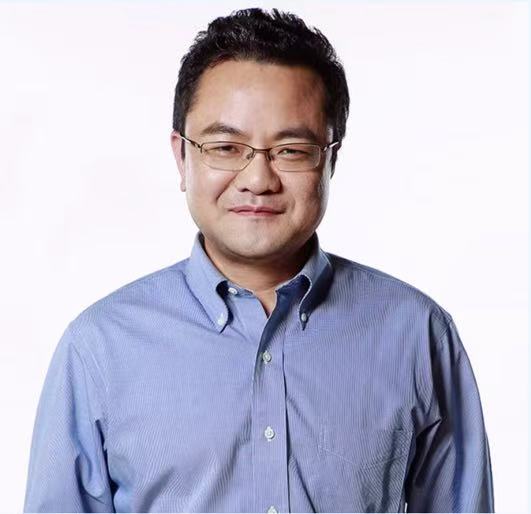
Dr. Hongtu Zhu is the Kenan Distinguished Professor of Biostatistics, Statistics, Radiology, Computer Science and Genetics at the University of North Carolina at Chapel Hill. He was a DiDi Fellow and Chief Scientist of Statistics at DiDi Chuxing between 2018 and 2020 and held the Endowed Bao-Shan Jing Professorship in Diagnostic Imaging at MD Anderson Cancer Center between 2016 and 2018. He is an internationally recognized expert in statistical learning, medical image analysis, precision medicine, biostatistics, artificial intelligence, and big data analytics. He received an established investigator award from the Cancer Prevention Research Institute of Texas in 2016, the INFORMS Daniel H. Wagner Prize for Excellence in Operations Research Practice in 2019, the IMS 2027 Medallion award and Lecture, and the COPSS 2025 Snedecor Award. He has published more than 360 papers in top journals, including Nature, Science, Cell, Nature Genetics, Nature Communication, PNAS, AOS, JASA, Biometrika, and JRSSB, as well as presenting 72+ conference papers at top conferences, including meetings for NeurIPS, ICLR, ICML, AAAI, and KDD. He is the coordinating editor of JASA and the editor of JASA ACS.
Abstract
Statistics was the original data science. Galton and Pearson worked from heredity measurements, Gosset from brewing experiments at Guinness, and Fisher from crop yields at Rothamsted. In each case a real problem came first. Data were then collected or designed to address it, methods were built for those data, and theory came last. From the mid-twentieth century onward, however, the field increasingly modeled itself on mathematics. The theorem became its main currency, applications shrank to a “real data example” at the end of the paper, and assumptions were chosen because they were tractable, not because they fit the science. Tukey warned against this in 1962, and Wu and Cleveland later proposed recasting statistics as data science. The trend continued anyway, and computer science and machine learning took over the problems, the data, and the methods. Statistics lost leadership of the field it had founded. AI now makes a correction urgent. AI is beginning to automate the derivations, proofs, and code that many statisticians treat as the core of their work. At the same time, foundation models raise exactly the questions statistics was built to answer, about uncertainty, bias, causality, and valid inference. Because our lasting value lies where the field began, we argue that statistics must return to its origin by restoring the natural order of inquiry: application first, then datasets, then method development, and statistical theory last. Important problems should set the agenda, well-designed datasets should count as scientific contributions, methods should be judged by what they make possible, and theory should explain why they work and where they fail. We discuss what this means for training, publication, promotion, and funding.
Moderator: Ying Lu
Stanford University
Biography
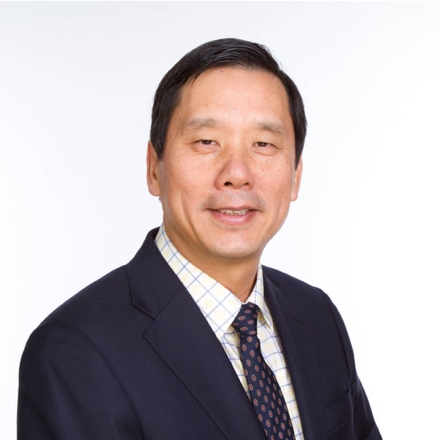
Ying Lu is Professor in the Department of Biomedical Data Science and, by courtesy, in the Department of Radiology and Department of Health Research and Policy at Stanford University. He is Co-Director of the Stanford Center for Innovative Study Design and the Biostatistics Core of the Stanford Cancer Institute. Before his current position, he was Director of the VA Cooperative Studies Program Palo Alto Coordinating Center (2009-2016) and Professor of Biostatistics and Radiology at the University of California, San Francisco (1994-2009). His research areas include biostatistical methodology and applications in clinical trials, statistical evaluation of medical diagnostic tests, and medical decision-making. He serves as biostatistical associate editor for JCO Precision Oncology and co-editor of the Cancer Research Section of the New England Journal of Statistics and Data Science. Dr. Lu is an elected Fellow of the American Association for the Advancement of Science and the American Statistical Association. He initiated the Stat4Onc Annual Symposium with Dr. Ji and Dr. Kummar in 2017 and is the principal investigator of the R13 NCI grant for this conference.