Keynote Session 1: Oncology Keynote
9:10-10:00 AM, November 22, 2026; Room 10A-D
How we utilize Artificial Intelligence for field of medical practice and oncology.
Speaker: Kan Yonemori, National Cancer Center Hospital (NCCH), Japan
Biography

Kan Yonemori is JSMO board certified-medical oncologist. He is Director of Medical Oncology at National Cancer Center Hospital (NCCH), Tokyo, Japan since 2020. Also Directors of both Department of Clinical Drug Development, and Division of International Medical Service (Since 2023) and Deputy Director of International Clinical Development Division (since 2015) of NCCH. He worked for the Pharmaceuticals and Medical Devices Agency in 3 years. He studied as visiting fellow in Investigational Drug Branch, Cancer Therapy Evaluation Program, US National Cancer Institute, US Food and Drug Administration in 2013. He dedicate in clinical trial for solid tumor, breast cancer, gynecologic cancer, urological cancer and sarcoma from phase I to phase III.
Abstract
Artificial intelligence (AI) is rapidly transforming oncology, creating new opportunities to improve clinical decision-making, personalize treatment, and accelerate cancer research. As the complexity of cancer care increases, oncologists face growing challenges in integrating expanding medical evidence, emerging therapies, and evolving clinical guidelines into daily practice.
In clinical settings, large language models and AI agents can support evidence retrieval, treatment selection, patient communication, and workflow optimization. AI-based imaging and pathology models are also advancing cancer risk prediction and biomarker development, potentially enabling more precise identification of patients who benefit from specific therapies. However, hallucinations, algorithmic bias, and uncertainties regarding clinical reliability highlight the importance of rigorous validation and human oversight.
Beyond clinical practice, AI offers opportunities to transform oncology clinical trials. Digital twins, synthetic control arms, AI-derived prognostic scores, and automated trial matching may improve efficiency, reduce sample size requirements, and facilitate patient recruitment. AI-driven biomarkers and predictive models may further optimize patient selection, treatment strategies, and trial endpoints. Nevertheless, replacing randomized clinical trials remains challenging because of limitations in causal inference, generalizability, and the prediction of unexpected toxicities.
This presentation will discuss current applications and future perspectives of AI in oncology from a clinician's viewpoint, emphasizing its implications for clinical trial methodology. Rather than replacing oncologists or clinical trials, AI should be used to augment clinical expertise and enable smaller, faster, and more informative trials while preserving rigorous evaluation of treatment benefits and patient safety.
Moderator: Shivaani Kummar
Director, Knight Cancer Institute, Oregon Health & Science University
Biography
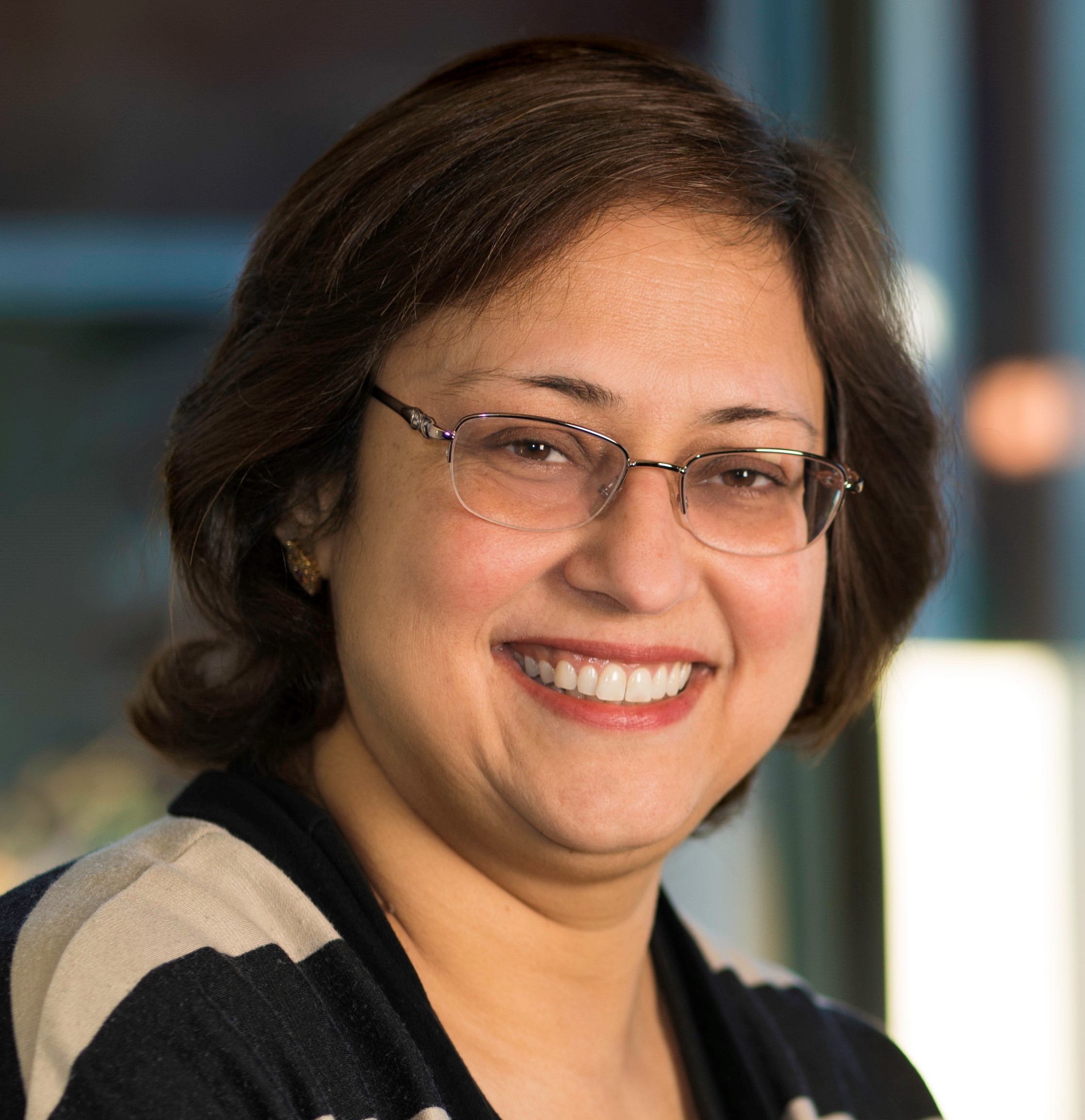
Dr. Shivaani Kummar is Director, Knight Cancer Institute, Chief Scientific and Academic Officer, Knight Cancer group, Margaret and Lester DeArmond Chair of Molecular Oncology, Division Chief of Hematology and Medical Oncology, co-Director of the Center of Experimental Therapeutics, Oregon Health & Science University (OHSU), Portland, Oregon, USA.
Prior to joining OHSU in 2020, she was on faculty at Yale University Cancer Center (2000-2004), served as Head, Developmental Therapeutics Clinic, National Cancer Institute, NIH (2004-2011), Head of Early Clinical Trials Development Office of the Director, Division of Cancer Treatment and Diagnosis, National Cancer Institute, NIH (2011-2015), Professor of Medicine and Director of the Phase 1 Clinical Research Program and Translational Oncology Program at Stanford University, Palo Alto, California (2015-2020).
She specializes in conducting pharmacokinetic and pharmacodynamic driven first-in-human trials tailored to make early, informed decisions regarding the suitability of novel molecular agents for further clinical investigation. She has authored 200 peer reviewed publications, 9 book chapters, and co-edited a book on ‘Novel Designs of Early Phase Trials for Cancer Therapies’. She is a member of the Scientific Planning Committee, American Society of Clinical Oncology (ASCO), member, National Cancer Policy Forum, National Academies of Sciences, Engineering and Medicine, Member, among others.