Keynote Session 3: Bioinformatics/AI Keynote
9:00-9:50 AM, November 23, 2026; Room 10A-D
Omics Data in Oncology Trials
Speaker: Hongyu Zhao, Yale School of Public Health, Yale University
Biography
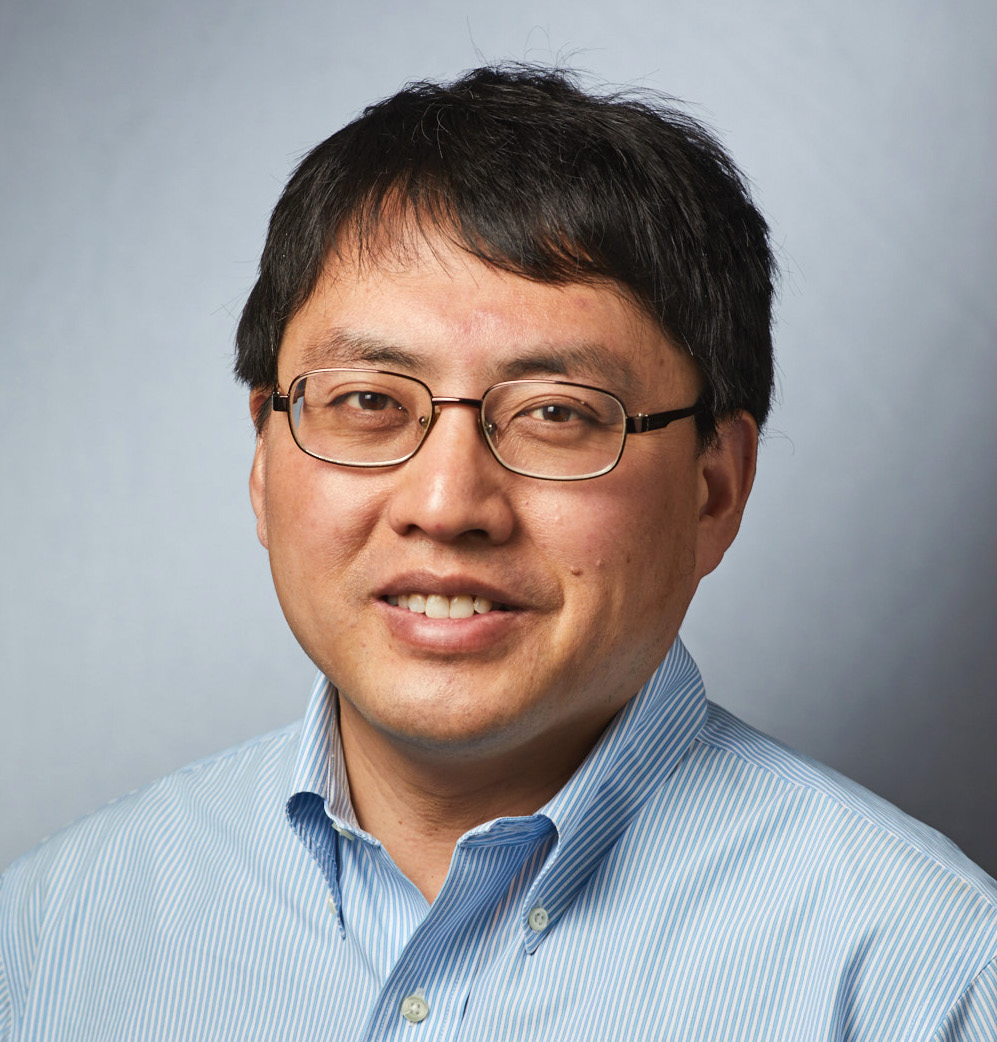
Dr. Hongyu Zhao is the Ira V. Hiscock Professor of Biostatistics, Professor of Statistics and Data Science, and Professor of Genetics at Yale University. His research interests are the development and application of statistical and computational methods to address scientific questions in genetics, molecular biology, drug development, and precision medicine. Some of his recent projects include single-cell data analysis, spatial transcriptomics, genome-wide studies to identify genetic variants underlying complex diseases, disease risk prediction using biobank data, QTL analysis, foundation models, biological network modeling and analysis, disease biomarker identification, and cancer genomics. Many of his methods are motivated by and applied to cancer research.
Abstract
Collecting -omics data in oncology trials is increasingly essential for advancing precision cancer medicine. Genetic, transcriptomic, proteomic, epigenomic, metabolomic, microbiome, spatial, and single-cell approaches can help identify the right patients for the right therapies, explain differences in response, and uncover mechanisms of resistance. Precision medicine has a long history in cancer research and treatment. This talk will discuss how -omics data can be used across the oncology trial lifecycle, including biomarker-driven eligibility, molecular stratification, response monitoring, and post-treatment discovery analyses. Used thoughtfully, -omics data can make oncology trials more efficient, more biologically informative, and better able to guide future therapeutic developments.
Moderator: Shannon McWeeney
Oregon Health & Science University
Biography

Dr. Shannon McWeeney, Professor at Oregon Health and Science University (OHSU), is a methodologist working at the intersection of computer science, biostatistics and genetics to develop approaches to solve research bottlenecks and novel ways to visualize and interpret information. Her work on novel computational methods and frameworks for prioritization is one of her most significant contributions to science. While these methods were initially applied to precision medicine (cancer), they have wide applicability for target identification and therapeutic prioritization for many complex traits. In 2010, Dr. McWeeney was selected as a Kavli Frontiers Fellow by the US National Academy of Sciences for these contributions. Dr. McWeeney is the inaugural Chief Data Officer and Associate Director of Data Science for the OHSU Knight Cancer Institute and has a career-long commitment to data sharing and patient engagement. She served as a member of the Enhanced Data Sharing working group for the NCI Blue Ribbon Panel for White House Moonshot Initiative and as a member of the Biden Cancer Initiative Data Sharing and Patient Empowerment workstream. In 2020, she was named the Director of Medical Bioinformatics for the OHSU Knight Precision Oncology Program, in which she is responsible for the hardening and validation of assays, algorithms and models in the transition from research analytics to CLIA. She is a M-PI for OHSU’s NCI Acquired Resistance to Therapy Network (ARTNet), which arose from her collaborative work for over a decade as part of the OHSU BeatAML program. She is also an MPI for the NIH Bridge2AI AI-READi Salutogenesis Data Generation Project, collaboratively working to develop automated tools to accelerate the creation of FAIR (Findable, Accessible, Interoperable, and Reusable), CARE (Principles for Indigenous Data Governance) and ethically sourced data sets for machine learning and artificial intelligence.